
Stihl MS 180 Manual: A Comprehensive Guide
Congratulations on your purchase! This guide celebrates your new chainsaw and provides a roadmap for successful operations, ensuring a positive experience.
Welcome to the world of Stihl chainsaws! The MS 180 is a lightweight, easy-to-use chainsaw designed for homeowners and occasional users. It’s renowned for its reliability, efficient performance, and user-friendly operation, making it ideal for a variety of tasks around the property.
This manual serves as a comprehensive guide to understanding, operating, and maintaining your new Stihl MS 180. Whether you’re felling small trees, pruning branches, or cutting firewood, this chainsaw is a versatile tool when used correctly.
We’ll cover everything from essential safety precautions to detailed assembly instructions, starting procedures, and ongoing maintenance. Understanding the components and adhering to the recommended maintenance schedule will ensure the longevity and optimal performance of your MS 180. Remember, proper operation and care are crucial for both your safety and the chainsaw’s lifespan. This guide will empower you to operate your chainsaw with confidence and efficiency.
Safety Precautions
Your safety is paramount! Operating a chainsaw involves inherent risks, and strict adherence to safety precautions is absolutely essential. Always wear appropriate personal protective equipment (PPE), including a helmet with face shield, hearing protection, safety glasses, snug-fitting gloves, and chainsaw chaps.
Before each use, inspect the chainsaw for any damage or loose parts. Ensure the chain is sharp and properly tensioned. Maintain a firm grip with both hands at all times during operation. Be aware of your surroundings and keep bystanders at a safe distance.
Never operate the chainsaw with one hand or attempt to reach beyond your comfortable range. Avoid cutting above shoulder height. Always shut off the engine before refueling, adjusting the chain, or performing any maintenance. Store the chainsaw in a secure location, out of reach of children. Familiarize yourself with kickback and how to prevent it.

Components and Parts Identification
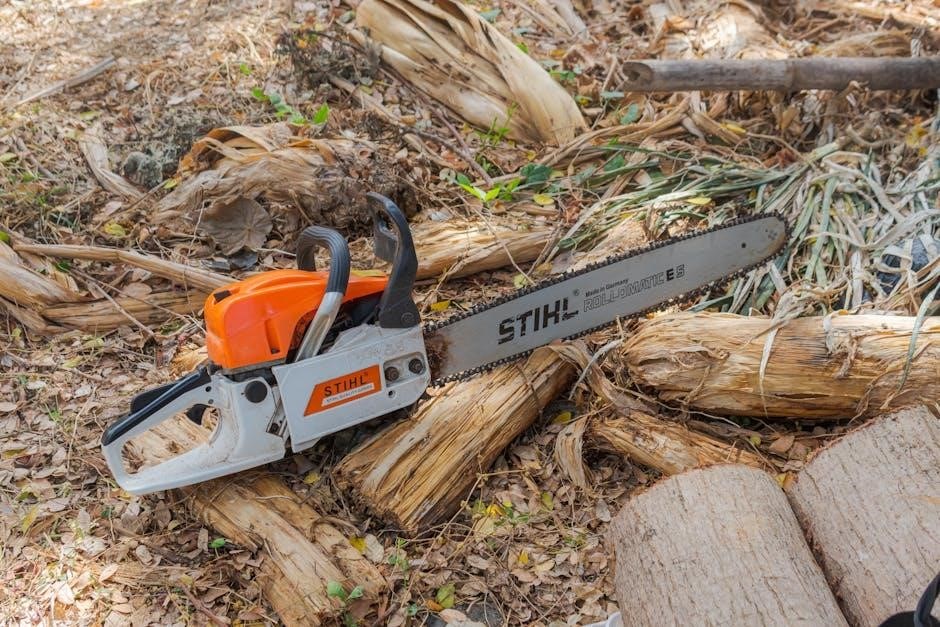
Familiarization is key! The Stihl MS 180 consists of several key components working in harmony. These include the engine, chain, guide bar, fuel tank, oil tank, starter assembly, anti-vibration system, and throttle control. The engine powers the chain, which cuts through wood guided by the bar.
The fuel tank holds the gasoline-oil mixture, while the oil tank contains chain lubricant. The starter assembly initiates the engine, and the anti-vibration system reduces operator fatigue. The throttle controls engine speed. Identifying each part is crucial for maintenance and repairs.

Pay close attention to the chain catcher, chain brake, and spark plug location. Understanding the function of each component ensures safe and efficient operation. Refer to the exploded view diagram in this manual for a detailed visual representation of all parts.
Engine Components
The heart of the MS 180! The engine features a two-stroke design, requiring a precise fuel-oil mixture for optimal performance. Key components include the cylinder, piston, crankshaft, connecting rod, and carburetor. The cylinder houses the piston, which moves up and down, driven by combustion.
The crankshaft converts this linear motion into rotational power. The connecting rod links the piston to the crankshaft. The carburetor mixes air and fuel for combustion. The spark plug ignites this mixture, initiating the power stroke. Proper functioning of each component is vital for reliable operation.
Inspect the spark plug regularly for fouling and replace as needed. Ensure the cylinder and piston are free from damage. Maintaining these engine components guarantees longevity and efficient cutting power.
Chain and Bar Details
Essential for cutting performance! The Stihl MS 180 utilizes a robust chain and bar system designed for efficient wood processing. The chain pitch is crucial; typically .325” for versatile cutting. Chain gauge determines the thickness of the drive links, usually .050”. Bar length varies, commonly ranging from 16 to 18 inches, influencing cutting capacity.
The bar itself is constructed from hardened steel, guiding the chain during operation. Regularly inspect the bar for wear, burrs, and straightness. A worn or damaged bar compromises cutting accuracy and chain life. Proper chain tension is paramount; too loose causes derailment, too tight increases wear.
Sharpening the chain correctly maintains optimal cutting efficiency. Always use a Stihl-approved file and sharpening guide. A well-maintained chain and bar are fundamental to safe and productive chainsaw operation.
Assembly Instructions
Preparing your Stihl MS 180 for operation! Upon unboxing, carefully inspect all components for any shipping damage. Begin by attaching the chain to the bar, ensuring correct orientation – the cutting edges face in the direction of bar rotation. Secure the chain with the bar nuts, but do not fully tighten them yet.
Next, mount the assembled bar and chain onto the chainsaw’s sprocket. Adjust chain tension; it should deflect slightly when lifted midway along the bar. Tighten the bar nuts securely, rechecking tension after initial use. Attach the chain catcher, a vital safety feature preventing chain derailment.
Finally, install the anti-vibration system and handle components, ensuring all screws are tightened to the manufacturer’s specifications. A properly assembled chainsaw is crucial for safe and efficient operation. Refer to the diagrams in this manual for visual guidance.
Starting the Stihl MS 180
Initiating your Stihl MS 180 requires a specific procedure! Always ensure the chainsaw is placed on a firm, level surface and the chain brake is engaged before attempting to start. Verify the fuel and oil levels are adequate. For a cold start, set the choke lever to the ‘start’ position and prime the fuel bulb several times.
Grip the front handle firmly with your left hand and the rear handle with your right. Pull the starter cord with a smooth, deliberate motion. Once the engine sputters, disengage the choke and pull the cord again to start the engine. For a warm start, the choke is typically not needed; simply pull the starter cord.
Allow the engine to warm up briefly before use. Always maintain a secure grip and be aware of the surrounding environment.
Cold Start Procedure
Starting a cold engine on your Stihl MS 180 demands precision! First, confirm the chain brake is engaged and the saw rests on a stable surface. Locate the choke lever and move it to the ‘start’ position – this restricts airflow, enriching the fuel mixture for easier ignition.
Next, firmly press the fuel pump primer bulb multiple times until fuel is visible within it. This action delivers fuel to the carburetor. Grip the front and rear handles securely. Now, pull the starter cord with a smooth, controlled motion.
As the engine attempts to ignite, you may hear sputtering. Immediately disengage the choke lever and pull the starter cord again. The engine should now start and run. Allow it to warm up briefly before operation.
Warm Start Procedure
Restarting a warm Stihl MS 180 engine is typically simpler than a cold start! Ensure the chain brake is engaged and the saw is securely positioned. Unlike a cold start, the choke lever generally isn’t needed for a warm engine.
However, if the engine doesn’t immediately respond, briefly engage the choke for a single pull of the starter cord. Immediately disengage the choke. This provides a small fuel boost without flooding the engine.
Grip the handles firmly and pull the starter cord with a smooth, deliberate motion. The engine should start quickly. If it continues to resist, repeat the brief choke engagement and pull again. Avoid excessive pulling, which can flood the carburetor.
Operating Instructions
Before each use, visually inspect the Stihl MS 180! Confirm the chain is properly tensioned, the bar is lubricated, and all safety features are functioning correctly. Always wear appropriate personal protective equipment, including safety glasses, hearing protection, and gloves.
When cutting, maintain a firm grip on the saw with both hands. Keep a stable stance and be aware of your surroundings. Avoid cutting above shoulder height. Let the chain do the work; don’t force it. Use proper felling techniques when dropping trees, and be mindful of kickback.
Regularly check the chain tension during operation and adjust as needed. Monitor the bar oil level and replenish as necessary to ensure adequate lubrication. Always shut off the engine before refueling or performing any maintenance.
Chain Sharpening Guide
Maintaining a sharp chain is crucial for safe and efficient cutting! A dull chain requires more force, increasing the risk of kickback and operator fatigue. Use a round file of the correct size, typically 3/8 inch for the MS 180, and a file guide to maintain the proper filing angle – generally 30 degrees.
File each cutter tooth consistently, ensuring the depth gauges are uniform. Sharpen from the inside of the tooth outward. After sharpening, check the raker depth and file down if necessary, maintaining the correct height relative to the cutter teeth. Regularly inspect for damage.
Proper sharpening restores the original cutting angle and ensures optimal performance. If you are uncomfortable sharpening the chain yourself, consult a qualified service technician. A professionally sharpened chain will significantly improve cutting speed and reduce strain on the saw.
Bar Maintenance and Care
Proper bar maintenance extends its lifespan and ensures smooth chain operation! Regularly inspect the bar for wear, burrs, and damage. Clean the bar groove frequently to remove sawdust and debris, preventing binding and premature wear of the chain and sprocket. Use a bar groove cleaner or a flat screwdriver carefully.
Periodically flip the bar over to distribute wear evenly. Check the bar rails for straightness; bent rails can cause chain derailment. Lubricate the bar regularly with bar and chain oil, especially during prolonged use. Ensure the oiler is functioning correctly.
If the bar becomes excessively worn or damaged, replace it with a new one. A damaged bar can significantly reduce cutting performance and increase the risk of accidents. Always use a Stihl-recommended bar for optimal compatibility and safety.
Fuel and Oil Mixing Ratios
Maintaining the correct fuel and oil mixtures is crucial for the Stihl MS 180’s performance and longevity! Always use fresh, high-quality unleaded gasoline with a minimum octane rating of 87. Stihl recommends a 50:1 fuel-to-oil ratio for the MS 180 when using Stihl HP Ultra oil or a comparable high-quality 2-stroke engine oil.
This translates to 50 parts gasoline to 1 part oil. For example, mix 100ml of oil with 5000ml (5 liters) of gasoline. Always add oil to gasoline first, then mix thoroughly before adding to the chainsaw’s fuel tank. Never use oil intended for 4-stroke engines.
Using the incorrect fuel mixture can cause engine damage, reduced power, and increased emissions. Store fuel mixtures in a clean, approved container and use within 60 days to prevent degradation.

Troubleshooting Common Issues

Encountering problems with your Stihl MS 180? Here’s a guide to address frequent issues. If the engine won’t start, check the fuel level, spark plug connection, and ensure the choke is engaged for cold starts. A flooded engine requires repeated pull-starts with the throttle open.
If the chain stops during cutting, inspect the chain tension – it should be snug but able to move freely around the bar. Verify adequate chain oiler lubrication; a dry chain will quickly overheat and stop. Also, check for obstructions like pinched wood or debris.
For persistent issues, consult a qualified Stihl servicing dealer. Never attempt repairs beyond your skill level, as improper servicing can lead to injury or further damage.
Engine Won’t Start
Facing a no-start situation with your Stihl MS 180? Several factors could be at play. First, verify sufficient fuel in the tank and ensure the fuel is fresh – old fuel can cause starting problems; Next, check the spark plug; it should be clean and properly gapped. A fouled or damaged spark plug needs replacement.
For cold starts, engage the choke and follow the starting procedure. If the engine is flooded (often from repeated pull-starts), open the throttle fully and pull the starter cord repeatedly without using the choke. Ensure the ignition switch is in the ‘on’ position.
If issues persist, consult a Stihl servicing dealer for professional diagnosis and repair.

Chain Stops During Cutting
Experiencing chain stoppage mid-cut with your Stihl MS 180? This often indicates a binding issue. Immediately release the throttle and turn off the engine. Inspect the guide bar for pinching, which can occur when cutting with the wrong part of the bar or encountering embedded objects.

Check chain tension – a loose chain is prone to derailing and stopping. Ensure adequate chain lubrication; a dry chain creates excessive friction. Clear any debris (wood chips, dirt) obstructing the chain’s path. Examine the wood itself; knots or internal stresses can cause binding.
If the problem continues, a professional inspection of the chain, bar, and drive sprocket is recommended. Ignoring this issue can lead to damage or injury.

Maintenance Schedule
Regular maintenance is crucial for optimal Stihl MS 180 performance and longevity. After every 5 operating hours, clean the air filter and inspect the guide bar for wear; Check chain tension and sharpen the chain if needed. Inspect and tighten all visible screws and nuts.
Every 25 operating hours, thoroughly clean the cooling fins on the engine and cylinder. Examine the anti-vibration system for damage. After 50 hours, replace the spark plug and clean the fuel tank filter; Inspect the fuel lines for cracks or leaks.

Annually, or after 200 operating hours (whichever comes first), have a qualified technician perform a complete inspection and service. Adhering to this schedule ensures reliable operation and minimizes downtime.
Storage Guidelines
Proper storage is essential to maintain your Stihl MS 180’s condition during periods of inactivity. Before long-term storage, drain the fuel tank completely to prevent gum formation and carburetor issues. Run the engine until it stops to clear the fuel line.
Clean the chainsaw thoroughly, removing any sawdust or debris. Lightly oil the chain and guide bar to prevent rust. Store the chainsaw in a dry, secure location, away from direct sunlight and extreme temperatures. Cover the chainsaw to protect it from dust and damage.
Remove the battery (if applicable) and store it separately according to the battery’s instructions. Periodically check the chainsaw during storage to ensure no issues arise. Following these guidelines will ensure a quick and easy restart when needed.
Technical Specifications
The Stihl MS 180 is a lightweight and reliable chainsaw designed for homeowner use. Displacement is 45.4 cc (2.8 cu. in.), providing ample power for various cutting tasks. Power output reaches 2.3 kW (3.1 hp), ensuring efficient performance.
Fuel capacity is 0.25 liters (8.5 fl. oz.), and the oil tank holds 0.14 liters (4.7 fl. oz.). Chain pitch is 3/8″ P, and the recommended bar lengths range from 14″ to 18″. Weight is approximately 4.9 kg (10.8 lbs), making it easy to maneuver.
The MS 180 features electronic ignition and a centrifugal clutch. Sound power level is 105 dB(A), and vibration levels are relatively low for user comfort. These specifications highlight the MS 180’s balance of power, portability, and ease of use.
No Responses